
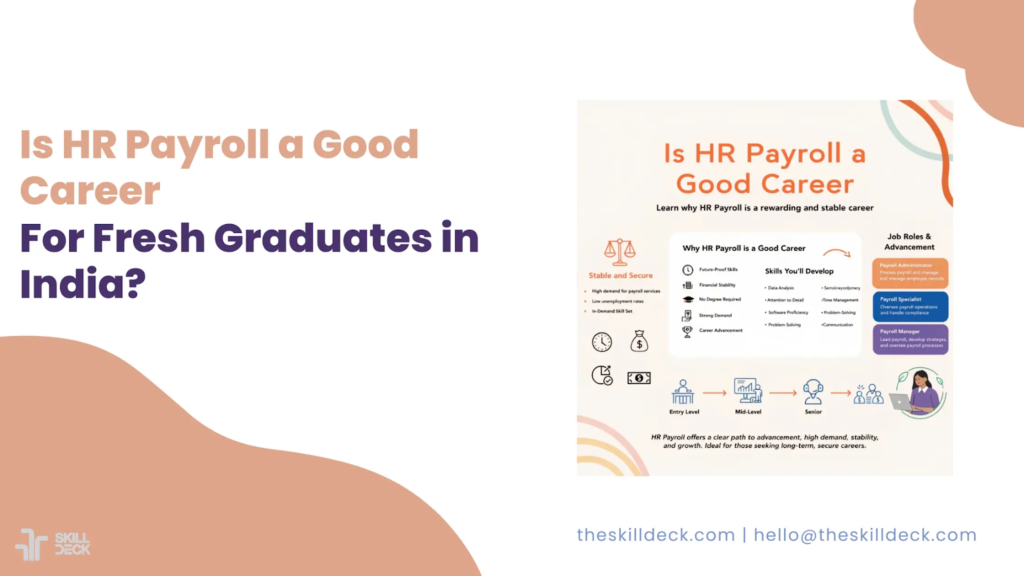
Short answer: Yes, HR Payroll is a solid, stable, and underrated career choice for fresh graduates in India. It offers steady demand, clear career progression, and skills that remain valuable even as HR technology evolves.
HR Payroll sits at the intersection of human resources, finance, and compliance. While it may not sound as flashy as recruitment or employer branding, payroll is one of those functions companies simply cannot afford to get wrong. For fresh graduates in India, this makes payroll a surprisingly strong entry point into the HR domain.
With increasing statutory complexity, payroll outsourcing, and automation tools entering the workplace, companies are actively seeking payroll professionals who understand both systems and compliance — not just software clicks.
Direct Answer: Is HR Payroll a Good Career for Fresh Graduates?
Yes, HR Payroll is a good career for fresh graduates because it combines job stability, skill-based growth, and long-term relevance. Unlike trend-driven HR roles, payroll remains essential across industries, company sizes, and economic cycles.
Companies actively hire payroll professionals because
- Indian labour laws require precise handling of PF, ESI, Professional Tax, TDS, and gratuity
- Payroll errors directly affect employee trust and legal compliance
- Many organizations outsource payroll but still need in-house experts to manage vendors and audits
In short: payroll professionals reduce risk — and businesses value that.
Entry-Level Opportunities for Freshers
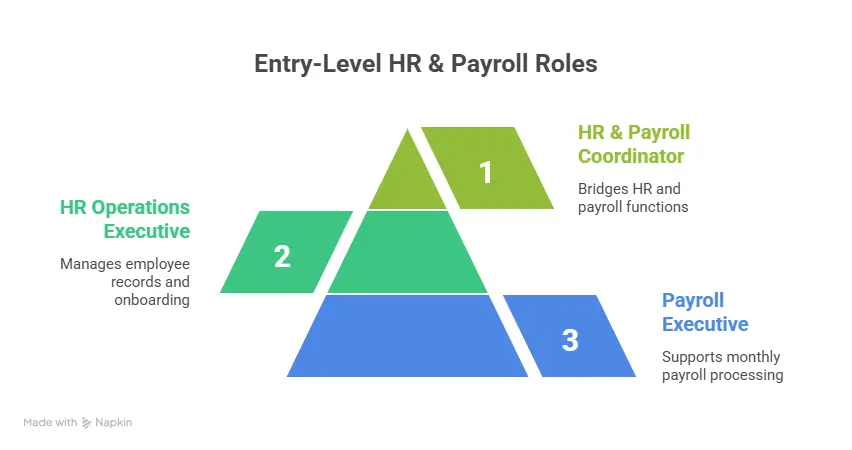
Fresh graduates usually enter payroll through hands-on operational roles that focus on accuracy, compliance, and real-world payroll exposure. These positions help build a strong foundation in Indian payroll processes before moving into specialist or managerial roles.
Fresh graduates typically start in roles such as:
Payroll Executive
Supports monthly payroll processing, validates attendance and salary data, prepares payslips, and assists with PF, ESI, PT, and TDS filings.
HR Operations Executive
Manages employee records, onboarding data, payroll inputs, and coordination between HR, finance, and payroll vendors.
HR & Payroll Coordinator
Acts as a bridge role, handling employee payroll queries, compliance documentation, and routine statutory reporting.
These roles focus on payroll processing support, data validation, statutory filings, and employee queries — practical skills that compound quickly.
Salary & Growth: What Can Fresh Graduates Expect in HR Payroll?
Payroll may start modestly, but growth is steady and predictable.
Average Payroll Salaries in India
| Experience Level | Typical Salary Range |
| Freshers (0–1 yr) | ₹2.5 – ₹4 LPA |
| 3–5 Years | ₹6 – ₹10 LPA |
| Payroll Manager / Specialist | ₹12+ LPA |
Salary benchmarks from platforms like AmbitionBox and Glassdoor India consistently show payroll professionals earning more as they specialize in compliance, audits, or global payroll.
What Is the Highest Paying Job in Payroll?
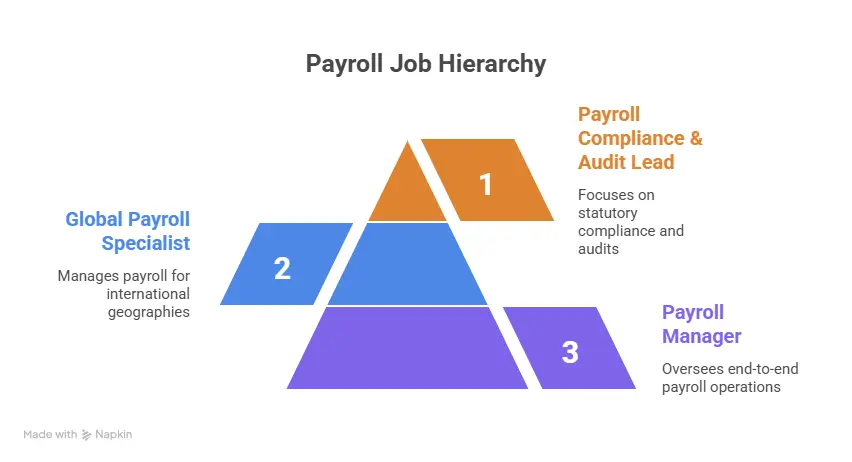
Some of the highest-paying roles include:
Payroll Manager
Oversees end‑to‑end payroll operations, manages teams or vendors, ensures statutory compliance, and handles audits and escalations.
Global Payroll Specialist
Manages payroll for international geographies (US, UK, Middle East), dealing with multi‑currency salaries, country‑specific laws, and global vendors.
Payroll Compliance & Audit Lead
Focuses on statutory compliance, internal and external audits, regulatory changes, and risk mitigation for payroll processes.
Specialization — not just tenure — is what drives income in payroll.
Is Payroll a Stressful Job? The Honest Reality
Let’s be real: payroll can be stressful, but in a very specific way.
When Payroll Gets Stressful
1. Month-end Payroll Closures
Tight deadlines to process salaries accurately, reconcile data, and resolve last-minute discrepancies before payout.
2. Year-end Tax Declarations and Form 16 Processing
Increased workload during financial year closure, including investment proofs, tax calculations, and employee queries.
3. Statutory Audits and Inspections
Preparation of compliance records, coordination with auditors, and responding to regulatory clarifications.
These are deadline-driven stress points, not constant pressure.
Why Many Professionals Prefer Payroll Anyway
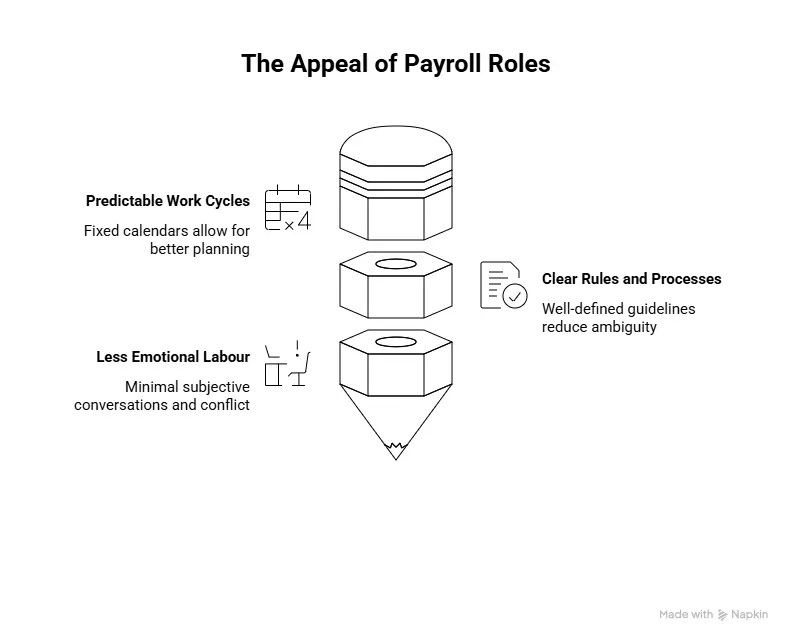
Predictable Work Cycles
Payroll follows fixed monthly, quarterly, and annual calendars, allowing professionals to plan work and personal time more reliably.
Clear Rules and Processes
Labour laws, payroll structures, and compliance frameworks provide well‑defined guidelines, reducing ambiguity in decision‑making.
Less Emotional Labour
Unlike recruitment or employee relations, payroll roles involve fewer subjective conversations and minimal people‑management conflict.
Many payroll professionals describe it as structured pressure, not chaos.
Is It Normal for HR to Do Payroll in India?
Yes — especially in India.
- In SMEs, HR executives often handle both HR operations and payroll
- In mid-to-large organizations, payroll becomes a specialization within HR
- In MNCs, payroll teams often work alongside finance and compliance departments
Payroll is not “separate” from HR, it’s one of HR’s most critical operational pillars.
Will Payroll Be Replaced by AI or Automation?
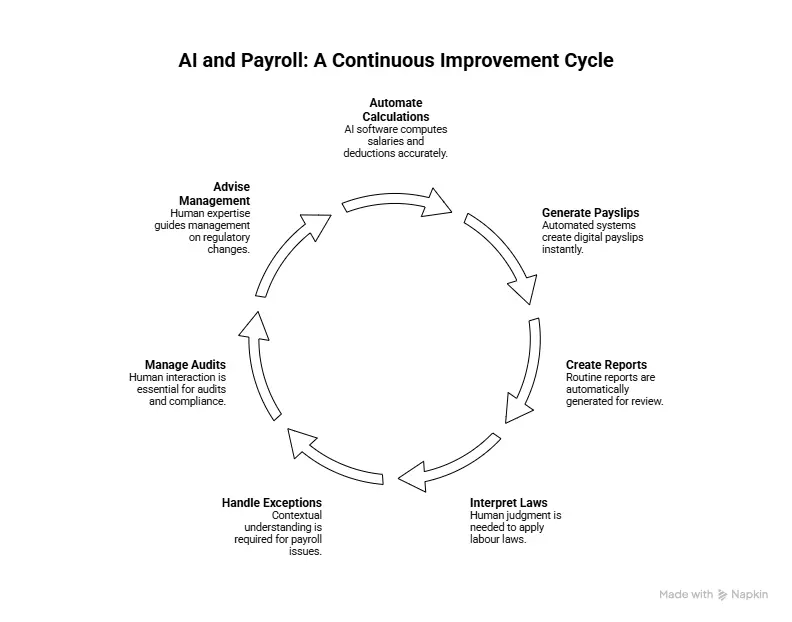
Short answer: No, but it will evolve.
What Automation Can Do
1. Salary Calculations
Payroll software can accurately compute gross-to-net salaries, deductions, and reimbursements based on predefined rules and salary structures.
2. Payslip Generation
Automated systems generate digital payslips instantly, reducing manual effort and minimizing calculation errors.
3. Standard Payroll Reports
Routine MIS reports, salary registers, and cost summaries can be created automatically for internal review and compliance.
What AI Cannot Replace
1. Interpretation of Labour Laws
Understanding how PF, ESI, gratuity, and tax laws apply in real scenarios still requires human judgment.
2. Handling Payroll Exceptions And Disputes
Employee queries, special cases, and corrections need contextual understanding and communication.
3. Managing Audits and Compliance Risks
Audits involve explanations, documentation, and regulator interactions that go beyond automation.
4. Advising Management During Regulatory Changes
Translating new labour laws into payroll impact and business decisions remains a human-led responsibility.
According to insights from Microsoft’s Work Trend Index and Gartner’s HR tech research, automation increases demand for skilled payroll professionals, not eliminates them.
Payroll vs Recruitment: Which Is Better for Fresh Graduates?
Here’s a practical comparison:
| Factor | Payroll | Recruitment |
| Job Stability | High | Moderate |
| Stress Type | Deadline-based | Target-based |
| Skill Longevity | Very High | Medium |
| Salary Growth | Steady | Variable |
| Personality Fit | Detail-oriented | People & sales-oriented |
Neither is “better” universally — but payroll suits graduates who prefer structure, logic, and long-term mastery.
Expert Insight from HR Payroll Educators
Educators who’ve trained fresh graduates in payroll often notice a clear shift in mindset once students understand why payroll matters. Concepts like labour law interpretation, tax calculations, and compliance management transform payroll from a clerical task into a business‑critical function.
This is consistently reflected in learner feedback on public review platforms like Trustpilot, where students highlight how structured payroll training helped them gain confidence in handling real‑world scenarios, understand Indian labour laws better, and see payroll as a long‑term career rather than a back‑office task.
Many fresh graduates specifically mention that engaging sessions, practical examples, and responsive faculty support helped them build clarity, accuracy, and a new professional perspective on HR payroll careers.
Key Takeaways for Fresh Graduates
- HR Payroll is stable, essential, and future-proof
- It rewards accuracy, consistency, and domain knowledge
- Ideal for graduates who value structure over hustle culture
- A strong foundation for advanced HR, compliance, or global roles
If you’re exploring broader HR domains, you may also find this HR Analytics career guide useful as a complementary path.
FAQ: HR Payroll Career for Fresh Graduates
Is HR Payroll A Good Career For Fresh Graduates in India?
Yes. HR payroll is a stable and in‑demand career for fresh graduates in India, especially due to increasing compliance requirements and payroll outsourcing. It offers steady growth, clear skill development, and long‑term relevance across industries.
Is Payroll A Stressful Job?
Payroll can be stressful during the month‑end processing, audits, and year‑end tax cycles. However, the stress is deadline‑based and predictable, making it more manageable compared to target‑driven roles like recruitment.
What Is The Highest Paying Job in Payroll?
The highest paying payroll roles include Payroll Manager, Global Payroll Specialist, and Payroll Compliance or Audit Lead. Professionals with expertise in international payroll and statutory compliance earn significantly higher salaries.
Is it Normal For HR To Do Payroll In India?
Yes. In many Indian organizations, especially SMEs, HR professionals handle payroll along with HR operations. In larger companies, payroll becomes a dedicated specialization within the HR or finance function.
Will Payroll Be Replaced By AI or Automation?
No. While AI and payroll software automate calculations and reporting, human expertise is still required for compliance interpretation, audits, exception handling, and regulatory advisory.
Which is Better For Fresh Graduates: Payroll or Recruitment?
Payroll is better suited for graduates who prefer structured, process‑driven work and long‑term stability. Recruitment may suit those who enjoy people interaction, targets, and variable performance‑based growth.