
HR Compliance Checklist For Indian Companies (2026 Guide)
HR compliance in India refers to ensuring that an organisation’s employment practices align with labour laws, statutory obligations, and workplace regulations. In 2026, this process has become far more structured following the implementation of the Four Labour Codes which consolidated 29 central labour laws into a simplified framework.
For HR teams, founders, and compliance officers, maintaining an HR compliance checklist is necessary to ensure every regulatory obligation is fulfilled. Indian labour law operates on two levels:
- Central labour laws
- State labour laws
Central laws define the broad framework. States issue their own rules for matters such as Professional Tax, Shops and Establishments compliance, and Labour Welfare Fund contributions.
This layered system means companies must track multiple compliance requirements across payroll, employee documentation, workplace safety, and statutory filings.
Many organisations choose to work with external experts to manage these obligations and avoid regulatory gaps. Professional HR compliance services can help companies manage statutory filings, labour law documentation, audits, and compliance calendars in a structured manner.
In my experience working with HR professionals and training new HR managers, the biggest compliance failures rarely come from ignorance of laws — they come from missing deadlines, incomplete documentation, or lack of a structured checklist.
This guide provides a complete HR compliance checklist for Indian companies in 2026.
What Is HR Compliance?
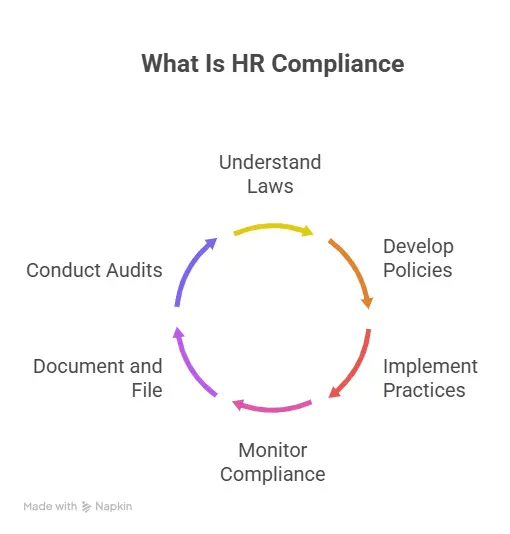
HR compliance refers to the process of ensuring that an organisation’s HR policies, employment practices, and workforce management align with applicable labour laws and regulatory requirements.
In India, HR compliance covers three major areas:
Employment Laws
These laws govern the contractual relationship between employer and employee. They include:
- Employment contracts
- Appointment letters
- Notice periods
- Termination rules
The Industrial Relations Code and related labour regulations govern many of these employment terms.
Statutory Obligations
Statutory compliance refers to mandatory financial contributions and filings required under labour and tax laws.
These include:
- Provident Fund (PF)
- Employee State Insurance (ESI)
- Professional Tax
- Labour Welfare Fund
These obligations ensure that employees receive social security benefits.
Workplace Regulations
Workplace regulations ensure safety, fairness, and employee well-being.
Examples include:
- POSH compliance
- Workplace grievance mechanisms
- Health and safety standards
In modern organisations, HR teams are responsible for monitoring these compliance requirements and ensuring proper documentation, filings, and audits.
What Is an HR Compliance Checklist?
An HR compliance checklist is a structured system used by organisations to track all legal and regulatory HR requirements.
Instead of relying on memory or scattered documentation, HR teams use checklists to track:
- monthly filings
- annual returns
- employee documentation
- statutory deposits
Large companies typically integrate these checklists with HRMS software to automate reminders and reporting.
Why Do Companies Use A HR Compliance Checklist?
There are several strategic benefits of using a a HR Compliance Checklist:
Risk Reduction
A checklist prevents missed statutory deadlines that could result in penalties or legal notices.
Audit Readiness
During labour inspections or internal audits, companies must produce registers, employee records, and compliance filings.
A structured HR compliance documentation checklist ensures these documents are always available.
Legal Protection
Maintaining compliance documentation protects companies during employee disputes and litigation.
Why HR Compliance Is Important for Businesses
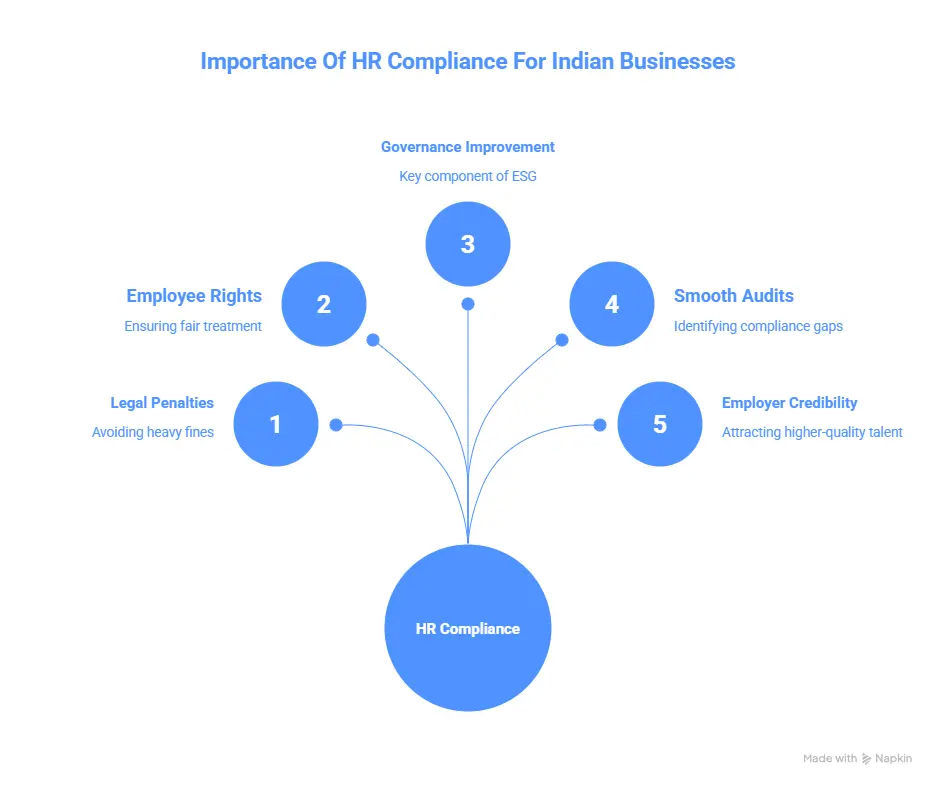
Avoid Legal Penalties
Non-compliance can result in heavy fines under the new labour code framework. Repeat violations may attract penalties up to ₹20 lakh depending on the nature of the violation.
Protect Employee Rights
HR compliance ensures employees receive fair wages, statutory benefits, and a safe workplace environment.
Improve Organizational Governance
Compliance is now considered a key component of corporate governance and ESG frameworks.
Ensure Smooth HR Audits
Organisations frequently conduct HR audits to identify compliance gaps before regulatory inspections occur.
Build Employer Credibility
Companies that follow labour laws build stronger employer brands and attract higher-quality talent.
HR Compliance Checklist for Employers in India
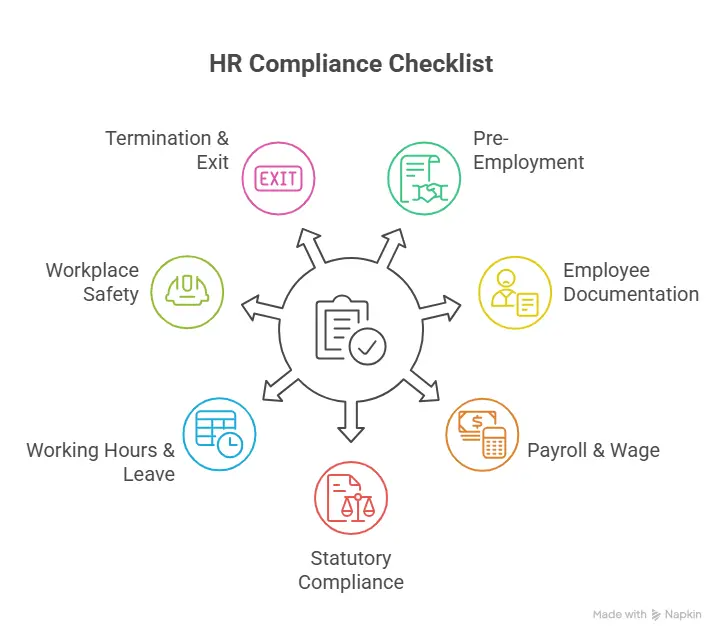
HR compliance requirements span the entire employee lifecycle, hence employers in India can use our practical HR compliance checklist to monitor statutory responsibilities and ensure ongoing compliance across different employment regulations.
Pre-Employment Compliance
Before hiring employees, organisations must ensure several compliance steps are completed.
These include:
- Job descriptions and offer letters
- Background verification
- Employment contracts
- Equal opportunity policies
Clear job descriptions help prevent employment disputes later.
Background verification helps validate identity, employment history, and qualifications.
Employee Documentation Compliance
Proper documentation forms the foundation of HR compliance.
Companies must maintain:
- Employee personal records
- ID proof and KYC documents
- Salary structure documentation
- Signed appointment letters
Employee records must typically be maintained for several years to support audits or inspections.
Payroll & Wage Compliance
Payroll compliance has become more structured with the introduction of the 50% wage rule under the Code on Wages.
Companies must ensure:
- Compliance with minimum wages
- Salary slips issued every month
- Salary payments within statutory timelines
- Overtime payments at double wages
Payroll errors are one of the most common sources of labour law violations.
Statutory Compliance
Statutory contributions represent one of the most important HR compliance responsibilities.
| Compliance | Applicability | Typical Rate | Due Date |
| Provident Fund | 20+ employees | 12% employer + 12% employee | 15th of next month |
| ESI | 10+ employees | 3.25% employer + 0.75% employee | 15th of next month |
| Professional Tax | State specific | Slab based | Monthly/Quarterly |
| Labour Welfare Fund | State specific | Varies | Half yearly/Annual |
Working Hours & Leave Compliance
Employers must comply with working hour regulations under labour laws and state Shops and Establishments Acts.
Typical requirements include:
- Maximum 48 working hours per week
- Weekly day off
- Overtime paid at double rate
- Paid annual leave eligibility
Workplace Safety Compliance
Workplace safety is governed primarily by the Occupational Safety, Health and Working Conditions Code.
Companies must ensure:
- Safe workplace infrastructure
- POSH committee for harassment complaints
- Workplace grievance mechanisms
Organisations with 10 or more employees must implement POSH compliance procedures.
Termination & Exit Compliance
Employee exits must follow specific legal procedures.
Employers must ensure:
- Notice period compliance
- Full and final settlement
- Exit documentation
- Experience letters
Recent labour reforms require final settlement payments within two working days after exit.
Annual HR Compliance Checklist
Annual compliance tasks typically include:
- Annual labour law returns
- POSH annual reports
- Licence renewals
- HR compliance audits
HR teams should review company policies every year to ensure alignment with legal updates.
Monthly HR Compliance Checklist
Monthly HR tasks include:
| Task | Deadline |
| PF contribution deposit | 15th of next month |
| ESI contribution | 15th of next month |
| TDS deposit | 7th of next month |
| Professional Tax | State specific |
| Payroll processing | End of month |
Regular monitoring of attendance and payroll records is essential to maintain compliance.
Common HR Compliance Mistakes Companies Make
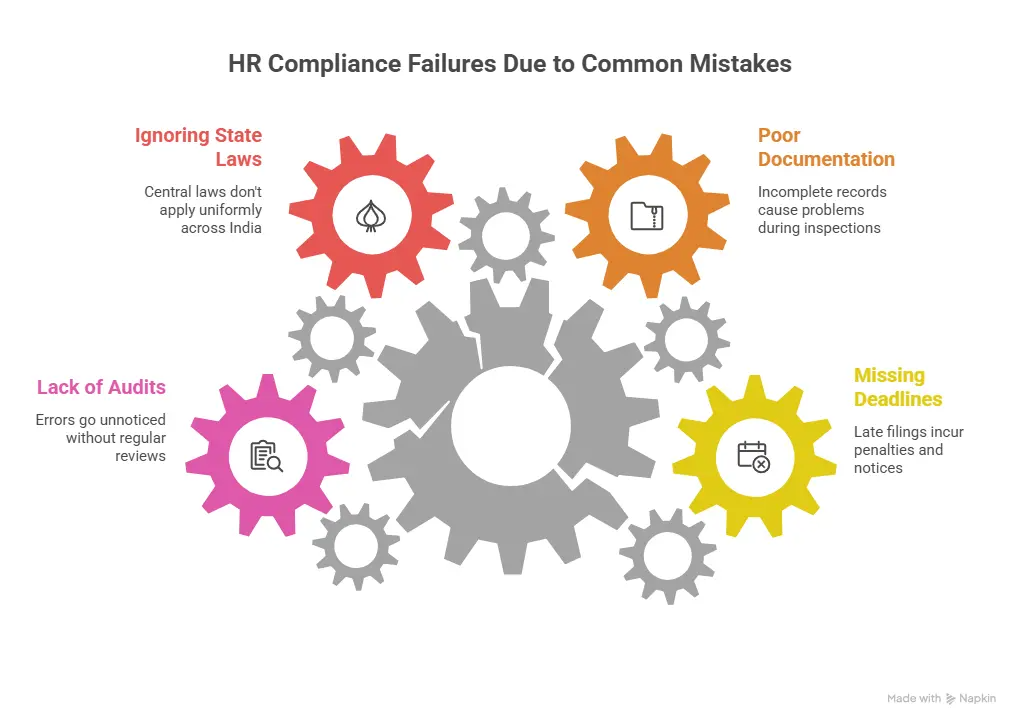
Many companies struggle with HR compliance due to operational mistakes rather than lack of awareness. Understanding the most common compliance mistakes helps organisations proactively strengthen their HR processes and avoid regulatory penalties.
Common mistakes include:
Missing Statutory Deadlines
Many organisations fail to track due dates for statutory deposits and filings such as Provident Fund, ESI, Professional Tax, and TDS. These deadlines occur monthly, quarterly, and annually, and missing even one filing can lead to interest penalties, late fees, or compliance notices from authorities. Companies that rely on manual reminders or spreadsheets are especially vulnerable to this issue.
Poor Documentation
Incomplete or poorly maintained employee documentation is another major compliance gap. Missing appointment letters, unsigned contracts, incomplete KYC documents, or outdated employee records can create serious problems during labour inspections or employee disputes. Proper documentation also includes maintaining statutory registers, payroll records, and attendance records in the prescribed format.
Ignoring State Labour Law Variations
India’s labour law framework operates at both central and state levels. Many companies mistakenly assume that central labour rules apply uniformly across the country. Requirements related to Professional Tax, Labour Welfare Fund, Shops and Establishments registration, and leave rules vary significantly by state. Failing to track these differences can lead to unintentional non‑compliance.
Lack of HR Compliance Audits
Companies often focus on day‑to‑day HR operations but neglect periodic compliance reviews. Without internal HR audits, errors in payroll calculations, statutory contributions, or employee documentation may go unnoticed for long periods. Regular compliance audits help identify these issues early and allow organisations to correct them before regulatory authorities or employees raise concerns.
These mistakes can trigger labour inspections, employee complaints, or legal notices if not addressed proactively.
Best Practices for Managing HR Compliance
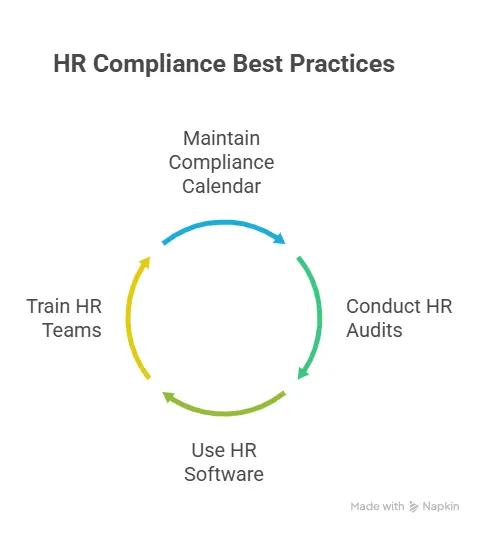
Maintain a Compliance Calendar
A compliance calendar tracks all monthly, quarterly, and annual statutory obligations.
Conduct Internal HR Audits
Regular HR audits help identify gaps before regulatory authorities detect them.
Use HR Compliance Software
Modern HRMS platforms automate payroll compliance, statutory filings, and register maintenance.
Train HR Teams Regularly
Labour laws in India evolve frequently. HR teams must stay updated through regular training.
HR Compliance Checklist Template (Downloadable)
Below is a simplified HR compliance checklist format suitable for Excel or Google Sheets.
| Compliance Area | Task | Frequency | Responsible | Deadline | Status |
| Payroll | Salary Processing | Monthly | HR | Month End | |
| Statutory | PF Deposit | Monthly | Payroll | 15th | |
| Statutory | ESI Deposit | Monthly | Payroll | 15th | |
| Compliance | POSH Training | Annual | HR | Annual | |
| Documentation | Employee Records Update | Ongoing | HR | NA |
HR teams can expand this template based on company size and state-specific regulations.
HR Compliance Career Opportunities
HR compliance is emerging as a specialised HR career path.
With complex labour laws and growing regulatory oversight, organisations increasingly require professionals skilled in:
- labour law interpretation
- statutory compliance
- payroll compliance
- HR audits
Professionals with compliance expertise often work as:
- HR Compliance Managers
- Labour Law Consultants
- Payroll Specialists
- HR Auditors
Demand for HR compliance experts is particularly strong in large organisations and consulting firms.
Learn HR Compliance with Certification
Labour laws change frequently, and structured HR training has become necessary.
Professional certification programs help HR professionals understand:
- labour laws in India
- statutory compliance processes
- HR documentation standards
- payroll compliance frameworks
SkillDeck offers specialised HR certification programs designed to help HR professionals build strong compliance expertise.
Conclusion
HR compliance in India has become significantly more complex with the introduction of the new labour codes and digitised regulatory monitoring.
Organisations must treat compliance as an ongoing operational process rather than a one-time task.
Maintaining a structured HR compliance checklist, conducting regular audits, and using compliance software can help businesses avoid legal risks while building a transparent and employee-friendly workplace.
For HR professionals and companies alike, developing strong HR compliance systems is essential for sustainable growth in the modern Indian regulatory environment.
Frequently Asked Questions
What Are The Most Common Statutory Compliances Included In An HR Compliance Checklist?
Most HR compliance checklists in India include statutory requirements such as Provident Fund (PF), Employee State Insurance (ESI), Professional Tax, Labour Welfare Fund, and Tax Deducted at Source (TDS). Employers must calculate contributions correctly, maintain payroll records, and file statutory returns on time to remain compliant.
What Are The Typical Monthly HR Compliance Tasks For Indian Companies?
Monthly compliance tasks usually include depositing PF and ESI contributions, processing payroll, maintaining attendance records, and depositing TDS. PF and ESI contributions are generally required to be deposited by the 15th of the following month, while TDS is typically deposited by the 7th.
What Annual HR Compliance Filings Must Companies Complete In India?
Indian companies must file several annual labour law returns depending on the applicable laws and industry. These may include returns under the Factories Act, Contract Labour Act, Minimum Wages Act, Payment of Bonus Act, and POSH annual reports. Filing requirements and deadlines may vary by state and establishment type.
What Records Must Employers Maintain For HR Compliance?
Employers must maintain various statutory registers and employment records such as employee registers, wage registers, attendance records, accident registers, and contribution challans. These records are often required during labour inspections or compliance audits.
What Happens If A Company Fails To Maintain HR Compliance?
Failure to follow labour law requirements can result in penalties, legal notices, inspections from labour authorities, and employee disputes. Missing statutory filings such as PF, ESI, or labour law returns may trigger compliance notices and financial penalties for employers.